Showing posts with label My Fishing Story. Show all posts

Monday, 6 December 2021

Piscatorial Ponderings: Angling, Mental Health and Me


I suppose it was back in 2005 when I realised I was sad. Regularly unhappy. Not just unhappy, but down right depressed.

I think like most people they assume that everyone gets sad sometimes, feels low and gloomy, and in this way many people don't really even think about it. But as the years progressed, these moments happened more frequently and lasted for longer times.

I still carried on with my daily activities, going to work, and looking after my daughter and doing my absolute best to remain cheerful every day and night, but things weren’t going well. I was increasingly finding it difficult to get out of bed. More and more I would find myself not eating at all, or conversely, eating way too much in one go. Going to work went from being a joy to a nightmare. I would get a deep feeling of dread and anxiety even right up to the moment I walked through the door, feeling sick to my very stomach, and that feeling started to turn to actuality as I started to feel very unwell, and I acquired very bad irritable bowel syndrome and other illnesses. I'd found myself sitting in a chair all day. Doing absolutely nothing. Sometimes just staring off into space until suddenly I'd realise that hours and hours had passed without me even noticing.

My skin started peeling off my body due to stress, and my anxiety was through the roof to a point where I couldn't do anything or go anywhere, and I shut myself off from all my friends and family.

But I was in charge of being the main breadwinner of the house, and also giving the majority of the care to my daughter, as my partner at the time was studying in university. My life was an endless cycle of work, child care, and trying to remain cheerful, and I persisted the best I could.

Understand that I didn't hate any of it. I loved going to work with my friends and spending time with my lovely daughter, but there was less and less time for me.

Naturally, I spoke to no-one about it. Not a soul knew how I felt or what I was experiencing. Men have to be strong and in control, and it's silly for them to discuss or look into ‘feeling a bit sad sometimes’. I had a job to do, and a family to look after and no-one would really understand anyway. So I carried on.


Until one day...I snapped. I have no recollection as to what triggered it, nor do I have any memory of anything I did or what was going through my mind. It's a complete blank to me, as these moments always are when they happen to me. A large space of time that I was not present for. But I woke up in the attic of our house, having slept there for time unknown. All I could hear were the voices of my partner and parents, on their phones, frantically calling everyone I knew asking if they had seen me, and starting to call the police. 

I had climbed up into the attic, pulled up the ladder and loft hatch, and fallen asleep. I had just needed to get away from everything. Be in a place where none of the world existed.

Of course, I came down and apologized and everything was revealed at last.

I went to the doctors where I was diagnosed with depression and given medication. 

It was actually a huge relief to get the diagnosis, because it became not a silly thing that I was half imagining and wasn't real, but an actual medical condition that existed.


But it didn't go away. 

The medication helped, for sure, but I still found myself keeping it all to myself, for the protection of others and being too scared to discuss it. Indeed, at the time, people around me still didn't really understand it. I had seen how distressed it had made everyone that day, so I still kept everything secret.

I suppose, naturally, it wasn't long before I found myself being single again. Not specifically my fault, it was about 50/50 on both sides. But for my part my depression had been the key to it, and I had to face the fact that I needed to get help and find a way of combating the shadow in my mind. I sought help from professionals, and started talking.

But I needed something more. I needed what I found in that cold, dusty attic. A way to get away from it all.


Through those years I hadn’t been fishing much. Perhaps only twice a year I would dust off the old fishing rods and head to the bank. My long time angling buddy and best friend Aaron had a child at the time too, and we had somewhat lost contact with each other as we got our heads around parenting our children and working to provide for them. But now I found myself living at his house, with his wonderful family, sleeping on the sofa until I found a new place to live, and we took this opportunity to get back out there and go fishing more. And almost as if I hadn't really known it, which indeed I had, it was in angling that I found that space. A space that had been there all along since I started fishing as a child. That place I could escape to and become myself again, banishing the shadow.
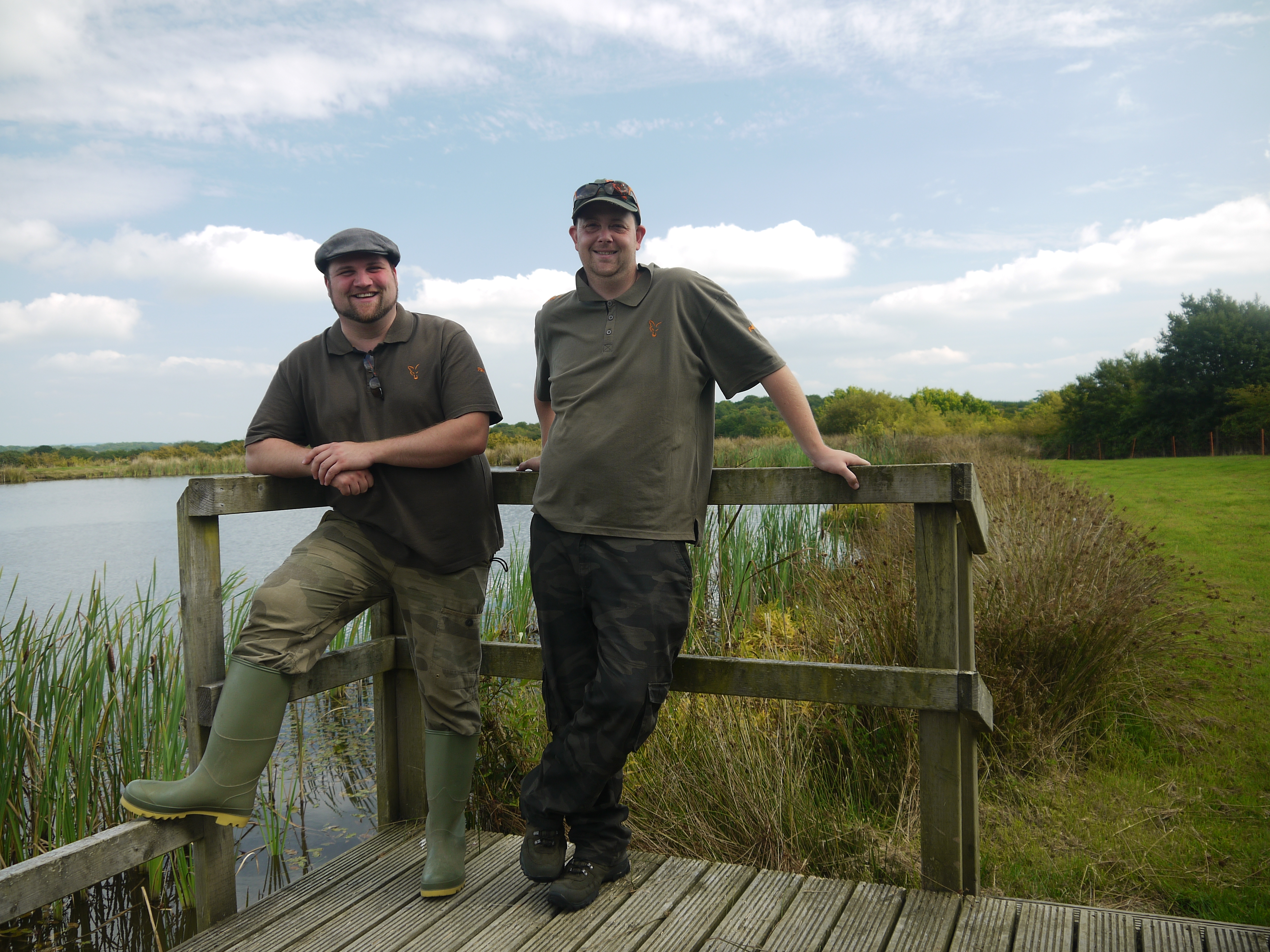

Best Friends of 30+ years. Aaron is my Regular Lifesaver and Angling Enabler

My stress and worry manifests itself eventually on my skin. I get terrible rashes and my skin peels off as if it were damaged skin after a sunburn, often leaving large open sores, particularly on my thumbs for some reason. Though my beard is magnificent, it is also needed during times of stress to hide the sores that appear there.

I've had many great peaks of stress in my life. Two failed long term relationships, each as heart breaking as the other to me, countless stressful jobs and shifts at work places, and many other extreme things I won't go into here, but trust me, were particularly traumatic, if not much more so than the ones mentioned. And day to day life of course can be stressful enough.


Many of these things people can deal with in normal life, but when you live with depression, it becomes very hard and sometimes impossible to deal with.

Angling helps with stress in a most magical way. You can carry with you, to the river bank, along with all of your rods and fishing tackle, all the stress and worry that you have in your life, but as soon as you start fishing, you can forget it all. 

A large reason for this is being out in nature and wildlife. Listening to the breeze blowing through the rustling leaves and the chirp of bird song is indescribably relaxing. Work is far away, as are those bills, and that annoying dog across the road that barks all day, and you have nothing else around you except the beauty of nature. On top of that, and probably even more important, you have the water. 


The Peace in Nature Angling Provides

It's no surprise that people love being around water. Walking along the seashores and down rivers and canals. Being near the water is so relaxing. The sound and smell of it is enough, but also the sight of it, rippling and reflecting the sun. Calming, peaceful and relaxing.

You often hear anglers talking about this being why fishing is incomparable to anything else at remedying their mental health, but I think there is something even more to it than that. After all, it's all true, nature and wildlife and water relieves my stress greatly, particularly as I am a great lover and appreciator of all these things, but I can go for a walk down a canal or sit by a river without fishing gear to get these things.

So why is angling more than that? Well, it's simple. You get all of that with angling, and focus.

I hear the bird calls and watch the rippling river flow by, but also I'm watching the float.

I'm focusing on that tiny orange tip of stick, waiting for it to dip or wave or bow about at the indication of a fish. While not fishing, your mind can still drift back to think about all that stress, but there's no time for that when fishing. Because none of that stuff matters. All that matters is whether a float dips under, or a rod tip swings round or an alarm goes off, and you are rewarded with an up close experience with a beautiful creature from another world, that few get to experience without a fishing rod in hand.

That's not to say you have to forget all your troubles, though I frequently do. Fishing can also give me the time to really think about some troubles and get to grips with them. To really concentrate on issues without any distractions from day to day life, and also help to put a lot of things in perspective.

It helps me to calm down also from traumatic events, incidents or thoughts, such as a loved one passing away, as they have recently thanks to the Covid-19 pandemic, and the passage of time and other horrible ways, like suicide.

It's very much like a form of meditation at times. In fact, a fish suddenly turning up on the line is the only thing that snaps me out of it sometimes!


Alone Time to Think

It's hard to describe depression to others who don't have it. I often find myself trying to describe it as a shadow, an actual thing that exists and interacts. Maybe like a Ringwraith from Tolkien's Lord of the Rings. 

Why is it so hard to get out of bed, or that chair for someone with depression, when they know there is plenty to do? It's like the shadow is forcing you into it, with some weight, without you realising. Holding you down silently against your will. It weighs you down by cloaking itself over your shoulders, making everything difficult and weighs on not only your mind, but your body. At least, that's how it is for me.

Other times I describe it as ‘Evil Steve’. An imaginary mirror copy of myself, talking in my ear. “You can't do this''. “You are rubbish at this”, it can say. And then, “No-one likes you”. “You have no friends”. And then more worryingly, “You're better off dead”. “No-one would miss you”. “They would all be happier without you”.

It's sad to hear, I expect, but it's what depression does to me, and others. And when ‘Evil Steve’ takes over, I start to believe it, because he isn't a separate person whispering all this in my ear. He IS me!

Of course not a word of anything depression says is true, and people have often, aggressively, told me how much they love and care for me and cant understand how I don't get it.

The truth being of course that I do believe people love and care for me, but it is me that neither loves or cares for myself. After being beaten down by all the shadow and thoughts of this every single day by the horror that depression is, it is all too often I can come to believe it regardless.

And in this way peoples lives fall apart and the suicide rates continue to rise.

Angling helps me with all of this. Firstly because it is so enjoyable. Very rarely do I find the shadow holding me in place when a day of angling is on the cards. Whether I catch fish or not, I know it's going to be exactly the remedy I need to feel better, and the mystery of what I will catch will always get me out there to discover it. 

It's not a disheartening activity that is hard to do and means you feel bad about not being good at it, it's incredibly easy! I've known many people who have always thought it looked complicated with all that line and knots and vast array of tackle, only to discover that it is incredibly simple and easy to do and enjoy. 

All the horrible thoughts disappear from my mind while fishing and I come to realise that life isn't so bad, in fact it's got loads for people to discover, and far from being a lonely hobby where you can feel isolated and alone, there is a vast community of people there sharing the same love as myself.


Angling's Rewards! Some of the most Spectacular Wildlife you will ever hold

The thing with anxiety is that you just can't face going out, and into social situations particularly. And not only me, but 8.2 million of us in the UK are troubled with anxiety issues, with twice as many women as men. Anyone who knows me will know me as a bright and friendly character, who loves nothing more than socialising with friends and having a good laugh. A very social person. But this is far from the truth.
I get terrible anxiety and often shut myself away on my own from others. I've been known to make up excuses not to go out with others because I just can't face it, and even on my way to work places or events I often feel sick to my very stomach about the prospect of it all, and on some occasions have been known to turn around and go home rather than do it.

That’s not to say my cheery self that people see is a lie, but more a version of me I want to be. It takes an extraordinary amount of effort to fight the anxiety and just force myself to be happy. I’ve had 20 years of practice at forcing myself to appear to be happy, and I’m pretty good at forcing it now, but it’s still very draining and exhausting to do so, and sometimes impossible. 

Of course, sometimes it’s exactly what you need, alone time away from people, and fishing can be perfect for that I find, but it is also the ultimate entry way into tackling anxiety by fishing with others.

I love fishing on my own. It's so very peaceful, but I love nothing more than going fishing with a friend. Spending some quality time with a person, and sharing in the experience with someone, can be the best days angling, and ones you will always talk about and remember.

In social situations where you are meeting new people, angling is the UK’s number one pass time, so introducing the fact you enjoy fishing more often than not leads to you finding another angler, and makes for a friendly, comfortable and easy conversation with a familiar topic and enjoyment factor. No awkward conversation starters for you!

This can then lead, as it has with me, to making new angling friends and being a part of angling groups. One of the most joyful experiences in my life, for example, is going to Anglers Paradise, in Devon. As a person who suffers with anxiety, you would think that going to a place filled with people would be daunting, in fact, initially it was, but I soon realized that everyone there was there for the same reason. To go fishing, and make friends with other anglers. We all share the same love in common, and now far from socialising being a stress here, it becomes a great joy that I look forward to more than anything else! Literally the highlight of my year. Zyg, Rose, Zenia and Joe, and all the team, work to make this place in particular a haven for me, and are true heroes.

The angling community is precisely what you want it to be, be it solitary and contemplative, or lively and bustling. 


The Angling Community. The most Treasured Friends and Memories I'll ever have


Angling is also a great way to build your self esteem. Catching a fish gives me an enormous sense of achievement, and then of course, there's always a bigger fish and more achievement should you catch a bigger one. And so it continues. There is always something to aim for be it fish, or venues or skills to learn and that certainly boosts my confidence more than anything else. Showing your mates the latest photos that you have taken on fishing trips, sharing them on instagram, or even being inspired to write an angling blog on your more memorable days out for people to read and yourself to reminisce about, and even be brave enough to film some fishing sessions for Youtube, like the ones I film for my Passionate Piscator channel.

The Steve of 2005 would never have foreseen a future version of himself, for example, writing a blog like this one, and filming himself for all the world to see. Opening up to strangers (and perhaps a few friends) and discussing his personal struggles with mental health.

The aim of my Youtube channel has always been to help. Show people they are not alone, and how angling can help to battle and ease the demons.

The aim is to get one viewer angling. Just one. And perhaps help save a life, as it has mine.


These fantastic people don't even realise they are saving a man from his Depression right here

Of course, I can only accurately describe my own version of mental health issues affecting me personally. It affects everyone differently. And also only from a male perspective.

Angling helps everyone who does it, but I do think that it helps men in particular.

Though the concept and acceptance of men sharing their emotions is certainly growing, it is still a huge issue that has a lot of stigma surrounding it. I still personally know SO many men who feel it isn't ‘manly’ to discuss feelings and emotions with anyone, least of all other men. And I know even more who still refuse, and will continue to refuse to get help. 

I used to be like this. Pride is a terrible thing sometimes. But I have found that it is in fishing that men can really get together and discuss things with their fishing friends.

I'm sure Aaron in particular won't mind me sharing that whenever us two get together to catch a few fish for the day, it gives us a real opportunity to catch up and have a good chat, and it always ends up a forum where we can have a good chat about any worries, stress or troubles happening in our lives. Thoughts and feelings we would just never share with our friends and even families in another situation, say down a pub, or at a meal or movie night or something. Worries at home, or issues with work or concerns with health or anything at all, the uniquely relaxed space angling provides is the perfect opportunity to air it all out, and let it wash away down stream. 

I've even been part of and witnessed a large group of male anglers gathered together, having a laugh and a merry old time and chatting about fishing, but also sharing with the entire group deeply personal issues, stress and anxiety concerns and health matters where I'm absolutely certain that they wouldn't do anywhere else. And I'm positive this happens all the time with other anglers.

Looking back, it was always seen that angling was a male sport, where an old man would be seen, catching nothing, going off to get away from the misses. A sad, lonely affair. But far from being a bad thing, those guys had the right idea. Life can be hard and stressful and depressing, and sometimes you just need to get away from it. They knew angling’s secret.

And luckily, since the old days, the secret is out! Angling is very good for you, and more and more of, not only men, but women and children too, are getting into it and discovering is huge array of benefits.


Anglers that Share Together, Stay Together.


I'm sure angling is the perfect place for the women to get away from a moaning husband, work worries, and kids. And for youngsters, the stress of dealing with puberty, living with parents and endless school work. A place where none of that stuff matters because it's not there, and you are. It’s also increasingly a place where families can spend time together, and get away from the electronic lifestyle and actually talk and bond. The internet, and social media, is a particularly toxic place (trust me, I know, I'm on Youtube!), and angling is a real tonic from all that nastiness.

Luckily for me, I discovered that angling is therapy to my mental health issues. 1 adult in 6 has a common mental health issue, and those definitely should be dealt with and spoken about, and perhaps fished away. 

Now I am not saying angling is the cure. I certainly get very depressed still, I still get anxious in social situations and get that horrible feeling in my tummy at nervous times, and I still get stressed from time to time, but in those times, as soon as I recognise that one of those horrible shadows starts creeping up again, I head out fishing as soon as I can. Everything washes away and it resets the countdown again like magic. And people around me know it now too. Friends will encourage me to go fishing when they know I am starting to struggle, even ringing me up and telling me to join them, or encouraging me to Anglers Paradise, which is where, as I have mentioned, the cure works strongest of all for me. 

And all who see the before and after remark that I am a completely different person when I come back from a day by a lake.

I truly believe that angling in particular is a thing that should be suggested and encouraged as a form of medication, relief and therapy from medical professionals to people who struggle with mental health, and recently in news it looks like this very thing is starting to happen.

Mental Health needs to be taken more seriously than it is, and angling in particular really needs to be recognised as the therapy it truly is.

If you have never been before and think it could help, and it really could, I'm certain if you get in contact with someone you know who goes fishing, they will be more than happy to go with you for the day and dangle a line in the water. I'm certainly one of them, so lets get going! 

I've always said that if you think fishing is about catching fish, you have missed the point of it entirely. If you go you might just realise that it's true, angling isn't about catching fish, it's about so very much more.


That Free Feeling you get when Fishing :)

Tuesday, 13 July 2021

Fish Facts: Minnow

The humble Minnow is a fish that explains me as an angler and piscator more than any other species. To explain why, I will highlight a fishing session in 2019 I had on the River Wey in Farnham. 

I had got there by train, and spent a good couple of hours patrolling up and down the river looking for Dace and Chub. There were loads to be found, 8oz+ Dace, massive Chub and even a river Carp could all be seen in the crystal clear, shallow water. It was summer and kids were splashing around in the water, but the fish were seemingly undisturbed, but try as I might I could not catch any of those Chub, or that Carp. I did have a few Roach and nice Dace, but I digress. Everywhere I put my float, for I only had maggots on me, I caught Minnows. No sooner had the bait touched the water, a Minnow would shoot up and grab it.

Now most anglers hate Minnows. They want to catch other much bigger fish species, as I was trying to admittedly do that day. Those anglers who hate them call them ‘pests’ and ‘nuisance fish’ and ‘so small they are not worth bothering with’, but I am different. I love Minnows.

Rather than get annoyed with them on that day on the River Wey, I fined down all my fishing gear and spent the best part of 2 or 3 hours specifically catching Minnows. Hundreds of them! After counting 200 fish, I lost count of how many I had, and I loved every second of it.

Much like a plant in a garden seen as a ‘weed’, if you grow it on purpose it becomes a beautiful wildflower, you can make nuisance fish into a fine quarry for a day of fishing by aiming for them.

To me, to be a TRUE angler and fisherman you should have a love and respect of all fish, and I love catching them all, not ‘even’ the humble Minnow...ESPECIALLY the humble Minnow.

I’ve had Minnow sessions many times in my angling history, and really end up getting into it, even to a point where I have taken some home and put in a fish tank to study them and their breeding behaviour, which is absolutely fascinating. Those who have not seen the stunning red bellied male Minnow during breeding season are truly missing out.

Trust me, anyone who tells you a Minnow is a boring, bland nothing of a fish, really isn’t worth listening to.   


A Marvel in Miniature


The Brave, Colourful Schooler

Minnow
(Phoxinus phoxinus)


European or Common Minnows are tiny fish, only around 2-3 inches long at their biggest. They are found across Europe and Eurasia, as far afield as Siberia. A member of the carp family Cyprinidae of the genus Phoxinus, they are abundant in clean, clear, cool fast waters. 

They have dark olive green backs with a brown stripe down the sides of the body and pale white/cream bellies. In the right light you are also able to see gold edging to their tiny scales. These fish also have striped banding, similar to that of a Perch, which becomes more pronounced on the male fish during breeding season. During breeding season all the colours on the male become more pronounced, and their bellies turn to a bright red colour.

Females are larger and broader than the males.

They have a short, rounded dorsal fin and a forked caudal fin. Minnows have a blunt nose and large eyes for their size to keep a good look out for predators.

Minnows can live for around 2-5 years, though many don't make it to breeding age at around a year old.

Minnows are forever alert and quick to dart away from danger, and towards food.

The current British Record Minnow (as of 2021) stands at 13.5 drams and was caught by James Sawyer in 1998 in, oddly enough, a lake. Whitworth Lake in County Durham.

A Minnow of 6+ drams is considered to be a specimen.


Some Chunky looking Specimens

Habitat


Minnows are most commonly found in large numbers in clean, well oxygenated water, making rivers and streams their usual habitat. Schools are often found in shallow, low flow areas such as slack water and back eddies where swimming is easier and food more easily found. Also they prefer to be under cover of trees or marginal plants to avoid the eyes of hungry predators from above. They like quite cool waters between 12-20 degrees celsius. Minnow can sometimes rarely be found in lakes and ponds, but usually these areas don't provide the clear well oxygenated environment they require.


Diet


Minnows, being a very small fish, eat very small things. Freshwater shrimps, tiny crustaceans, insect larvae, insects and molluscs are all quickly snapped up when located, as are aquatic plants and algae.


Minnow Schooled for Safety

Breeding


During breeding season Minnows are known to make short migrations upstream to spawn in the shallows. These areas tend to have less predators and the water is more oxygenated leading to better egg development. Breeding season is usually between April and August, which is a very long breeding season compared to other UK freshwater fish. By having a long breeding season it means the fish can spawn multiple times and boost their numbers enough to account for all the loss due to predation.  

The male of the species undergoes amazing changes during the breeding season. While the female tends to get a bit broader, the male changes colours dramatically. The usual dark markings and stripes on its flanks become much deeper and darker and more pronounced, and the gill cover changes to show white markings. On their heads, white bumpy spots called tubercles appear, but most noticeable of all, the males develop bright red bellies.

Males chase females through the water, rubbing their colourful sides against females. The males temperament also becomes more aggressive towards other males, as they try to ensure that the strongest fish get to fertilise the eggs when they are laid.

Breeding occurs over stony, gravelly or sandy substrate and occurs in large schools, with all fish breeding simultaneously. 

Each female Minnow lays between 500-1000 eggs that drop through the water as the brightly coloured males fight and rush in to fertilise them before they stick to a surface on the river bed. Minnow eggs only take 5-10 days to hatch, depending on the temperature of the water, and the young fish sexually mature in a year, if they make it past the predators to get that far.


Predators

The poor little Minnow is right near the bottom of the food chain and is therefore eaten by pretty much every water based predator you can think of. From above, birds such as Kingfishers and Grebes put Minnows high on their menu alongside many other fish eating species, Whereas underwater, Minnows are readily hunted by Perch, Pike, and Trout and all other predatory fishes and invertebrates. For a Minnow, the threat of being eaten is never ending.


The Breeding Colours of a Male Minnow

Survival


As mentioned before, a key survival strategy of the Minnow is to breed. Having a long breeding season means they can breed multiple times throughout the year and make their numbers soar.

Minnows are always found in large schools which helps them against predation. The more individuals there are in a school, the more eyes there are to keep watch on anything trying to eat them. Being in a large group also helps with finding and foraging for food in a similar way. More eyes find food quicker and easier.

However, there are some downsides to the schooling mentality. As a group Minnows are more noticeable, and competition for food is increased the more individuals there are. There is also an increased chance of diseases and parasites spreading through the fish, so it's not all easy being in a large crowd.

An odd thing a Minnow does do though is create a chemical when a predator is detected, though sadly the word ‘detected’ in this case often means ‘eating the individual’.

On death or damage the Minnow emits the chemical signal and the other Minnows react accordingly to avoid the predator, usually by balling up tighter together, as each individual Minnow tries to be at the centre of the school and furthest away from the danger. They will noticeably also go a lot paler in colour to baffle the predator more, which is why if you catch one when angling, it is often quite pale compared to its usual colouration. The chemical releasing behavior is odd because the chemical does not benefit the individual Minnow itself. By then it's too late for that one. But perhaps it helps siblings or, particularly, offspring of the individual in the school.

As a general rule, the more predator pressure there is in water, the bigger the Minnow schools are. 

Another odd, and extremely brave behavior Minnows show is called Predator Inspection. When a predator such as a Pike arrives in the swim, some Minnows from a school, rather than flee from it, will actually swim towards and around it to assess its danger. This vastly increases the chance the Minnow will be attacked, but interestingly it does help the Minnow to survive. It has been noted that these brave fish that inspect the predators in this way often escape them as they are more aware of the danger than others, and can therefore react quicker.

It is also true that in waters where predator numbers are high, this brave inspection behavior is seen to increase. 


Conservation


Minnows are a very abundant fish in UK rivers, particularly in the South. So long as their river systems remain clean, clear, oxygenated and unpolluted, the species will no doubt continue to thrive. Improved water management throughout the years, particularly better management of farm runoff, has seen rivers and streams become a lot cleaner and more oxygenated and benefit this fish greatly.


The Golden Scales in the Glowing Sun

Fishing

Under no circumstances are Minnow hard to catch on the hook. Float fish on a fine line with a size 20 or 22 hook baited with a maggot, pinkie or squat and they will attack your bait with no remorse at all. In fact free-lining is also a good method, just keeping an eye on the bait drifting through the clear water until it disappears into a Minnows mouth.

No reel is usually required for Minnows, so whips and poles, or even willow branches can be used to get the fish in quickly. And of course there is always the option of rolling up your trousers and getting in the water with them and netting them, though I have found this technique to be considerably more difficult due to the fish's speed.

In fact, Minnows are such bait robbers that many anglers find it harder NOT to catch them, when trying to aim for other species. In this case harder and bigger baits tend to last longer against the relentless feeding of a large Minnow school.

To catch a bigger Minnow requires two things, locating a venue where big Minnows are present, and engaging them in a war of attrition to eventually catch a bigger specimen through the crowds.

Being such a readily eaten prey, it is also worth keeping a couple of Minnows in a bait tub during Minnow fishing sessions, with a spare rod set up for Perch fishing to hand so that if the Minnow school you are catching from shows any signs of startled fish with a predator arriving, you can pop on a live Minnow to catch them.


Only with a set of Miniature Scales and the specimens be found


I think, regarding fishing for Minnows, what makes them so special is the fact that no anglers target them. I guarantee most anglers who catch Minnows throw them back unheeded, and actually throw back specimen fish or even British record fish. I always carry around a set of miniature scales with me when I go fishing, so I am able to weigh the biggest ones I catch.

At the time of writing this, I am the only angler I have met in 30 odd years of fishing who has a personal best weight for a Minnow. And that speaks a lot for how under looked they are.

When I’m fishing for a Minnow I know that there is probably hardly anyone else out there at the same time doing the same thing on purpose, and that makes it all the more special, compared to that of a Carp, say, who will be being targeted by thousands.

As you can tell from what I've written above, Minnows are surprisingly colourful fish, and despite being the bottom of the food chain, surprisingly brave and bold fish, especially in their large schools.

They are vastly important creatures in a healthy ecosystem, not only indicating the good water quality where they thrive, but providing so many other animals with food by becoming food themselves.

A Minnow is a marvel in miniature.

Thursday, 10 June 2021

Fishery Focus: Ashmoor Lakes Silvers

I am lucky enough to be part of a family who own a fishery. Ashmoor Lakes in Old Basing.

It is a small, mixed coarse fishery packed with many species of fish.

Initially they were dug for me, and I have been fishing there all of my angling life, over 30 years. It’s where I learned to fish, and as such I have extensive knowledge of the venue and how best to catch the fish.

So I figured it was about time I shared some of this information I've acquired through the years and how you can best target and catch certain species by design.


ASHMOOR SILVERS


Ashmoor Lakes is a mixed coarse fishery packed with many wonderful species. Though the Carp are the primary and most fished for species, the lakes are filled with a variety of what anglers call ‘silverfish’ as well.

A silver fish is an encompassing term for, unsurprisingly, a mostly silver coloured fish, such as Roach, Rudd, Bream, Chub, Dace, Bleak and other smaller fishes, but also sometimes includes less silver coloured fish like Crucian Carp and Perch.

When Ashmoor Lakes was first dug and stocked a bucket of various unknown tiny fish were added into them. No-one at the time had any idea what they were, and it was down to myself and Aaron over the next few years, before the fishery was opened to the public, to figure out what they were by catching them. As it turned out, the main stock of those silver fish were Rudd and Roach, whose ancestors make up the entirety of their population in Ashmoor Lakes today.

Later on, when the fishery was opened to the public, fish like Bream, Crucians and Chub were added to the mix to add more interest and provide angling sport all year round.

Though these fish have been there for many years, due to the angling pressure of the Carp, none have grown to record breaking sizes, but there are plenty of decent fish to catch for those who want to target them.

Other than the Carp and Barbel, the main focus for many Ashmoor anglers attention, there are Roach, Rudd, Bream, Tench, Crucian Carp, Perch, Chub, Golden Orfe and Goldfish present in Ashmoor, but rather than go into each one, I’ll spend some more time on the top 3 species, The Bream, the Roach and the Rudd. 

None of these fish are particularly difficult to catch, and a general day of mixed coarse fishing will catch all these species, and many of them, but there are ways to target them more specifically, and perhaps pick out the bigger fish..


BREAM


As mentioned, the Bream in Ashmoor were not there in the original stocking, but added just before the fishery was opened to the public. 50 individual fish were introduced to Lake 2, all no bigger than a few inches long. No stocking of Bream has taken place since, and as anyone who has fished Ashmoor will attest, there has been absolutely no need to. Those 50 Bream have bred like rabbits through the years, where now there must be thousands of them.

The fish have spread throughout the lakes via the underground pipe system and can and will be caught anywhere you sit.

There are indeed thousands of little skimmer Bream in Ashmoor Lakes, but bigger ones are present. 1-2lb fish are still fairly common, though none of the Bream seem to exceed 4lb in weight greatly.


A 1-2lb Bream on the Feeder

LOCATION

Though you can literally catch the Bream from anywhere, the best days Bream fishing can be had in the open water. Bream swim and feel safest in large schools and graze together. Casting out into the middle areas of the lakes will see you catching more Bream than in the margins.


TIME

The Bream here can be caught any time of the day. They are usually hungry enough to want food all the time, and they aren't too fussy about what you provide them. But like all Bream, they do prefer an overcast day to a sunny one. They fish particularly well during the winter months. This has a lot to do with the Carp becoming more dormant with the colder weather, giving the silver fish more of a chance to shine.


METHODS

Standard methods for Bream fishing sees good captures. The usual float fishing and quiver tip fishing with a feeder work well. 

When float fishing it is important to know the depth of the water with a plummet. Bream like to feed on the bottom of the lake mostly, where their food is found. Fishing a hook bait dead to depth, or even a few inches over depth to ensure the bait lies flat on the bottom gives them the best chance of finding your bait easier.

Bream are predominantly bottom feeding fish, and have mouths specifically designed to do so, but having said that, Ashmoor Lakes is one those rare, special venues where it is very possible to catch Bream on the surface. Gaining confidence among schools of other silver fish, like Rudd, they will happily come right up to the top of the water to intercept free offerings. In this way, you can fish for them very shallowly as if you were Rudd fishing, or even free-line bread on the very surface, though the Carp do tend to get there first with the latter.


BAIT

Being a farm fishery, the general rule with Ashmoor is that natural baits work best. Natural food is regularly blown onto the lakes from surrounding fields, and falls from the tree as Ashmoor is set in a woodland. Maggots and chopped worms therefore dominate when Bream fishing, and to a lesser extent bread and sweetcorn. However, as there are plenty of Carp fishermen that bait up the lakes too, and the Bream also enjoy pellets, especially soft hooker pellets or expanders, and luncheon meat. The Carp also prefer these however, so the trouble with using them to target Bream specifically comes with fishing fine lines for the Bream and heavy lines so you don't get broken up with the Carp.

In all cases of Bream fishing, using a ground bait pays dividends, not only to draw the fish in, but also to keep them feeding in the swim as you catch them.


BEST WAY TO CATCH

The best way to Bream fish at Ashmoor is undoubtedly to quiver tip for them with a small cage feeder rig on the end. A combination of ensuring the hookbait lays perfectly on the bottom and making sure the groundbait also gets to the bottom through the mostly surface feeding Rudd gives you the best chances of a good day catching Bream.

Throughout the session you will also catch all the other species of course, as they will all get drawn in. But there really isn't much you can do about that. To get the most Bream, hooking on 2 dead maggots is the best tactic. Live ones will wriggle into the silt often, resulting in a long wait for bites, but to target the bigger Bream a little more specifically, a hookable pellet on the hook works best.

As discussed though adding pellets will bring in the Carp. The issue here lies with the line you use. A nice fine line, like 2 or 3lb is best for your hooklength with Bream, but the Carp will soon smash that up. Using a stronger line, like 6lb+ will stop the Carp destroying it, but will result in less Bream.

The best way of getting around this is simple. Fishing for the Bream in Winter is better. As the Carp get more dormant and sluggish with the cold weather, you can more safely fish lighter lines. If a big Carp still takes your bait, they are likely to be more sluggish and easier to land on a light line, and there will be less anglers so you have more space to play the fish. 


Bagging up on Bream


ROACH


The Roach stock in Ashmoor originates from that first bucket of small fish tipped into the water when they were dug. Initially, we were unaware of the quantity of them, as most of the fish that were caught were the Rudd, being easier to see and target on the surface, but it was soon discovered that a healthy population of Roach were present, and caught less only because of the surface fishing tactics that were mostly used at the time.

There are lots of little Roach in Ashmoor, only a few ounces, but if you spend the time to target them, or if you are lucky when mixed fishing, you will often come across a few fish of 1lb+. Anglers who take the time to target the Roach here have caught them over 2lb.


A Decent Ashmoor Roach

LOCATION

The Roach can be found anywhere around Ashmoor Lakes, as they too swim between all 3 lakes freely thanks to the underground pipes that join all the lakes together. The Roach here tend to like the cover a bit more, so are more often found along the margins of the lakes, or underneath lilies or overhanging trees.


TIME

The are definite best times of the day to target Roach at Ashmoor. Being there fishing for them at first light and just as the sun sets is best. Roach always feed more confidently at these times of day, when predators are less likely to see them.

The best time of the year to target the Roach specifically at Ashmoor is during the winter months.


METHODS

Float fishing and quiver tipping, much like when Bream fishing, are the best methods to target the Roach. A cage feeder with a nice Roach groundbait will bring them in for a swim, casting to the margins or a similar feature working best.


BAIT

Natural baits are the best baits to use at Ashmoor as a rule, with the quantity of natural food finding their way onto the lakes from overhanging trees and blowing in from the fields. Roach love to eat maggots, worms, bread and sweetcorn baits. A really good bait to use alongside these is actually prawn, which often targets the bigger Roach.

The Roach will also eat pellet and luncheon meat hook baits, though less readily than the others.


BEST WAY TO CATCH

The best way to catch the Roach is with the float. Finding the depth of the water with a plummet, fishing a hookbait on the bottom is the way forward. No need to cast out far, the near margins are the place to be for them. With targeting Roach I wouldn't use a groundbait at all. It attracts the other fish, particularly Bream, too much. Instead, loose feeding small amounts of bait and often, over the top of the float, is the better tactic.

Maggot or chopped worms on the hook are great baits, but I’d also try some chunks of prawn, as they seem to love these too.

Similarly to the Bream, the best Roach fishing season is in the winter when the Carp are less active due to the colder weather. You can use finer lines because of this and therefore catch more Roach, and also enjoy catching them a lot more on more suitable gear that isn't big Carp proof stuff. It's worth emphasizing that it is the early morning and late even at all times of the year when you will catch the most and better sizes of Roach.


A Classic Roach


HYBRIDS


Just a quick mention at this point about the hybrids in Ashmoor. With the large populations of Roach, Rudd and Bream whose breeding seasons are at the similar times, there are a lot of cross bred fish present in Ashmoor.

Luckily, the cross bred fish are still very decent fish, particularly the Roach/Bream and Rudd/Bream hybrids. Bream as a species aren’t renowned for their fighting habits when caught, but the Bream hybrids give a much better account of themselves.

It’s not always easy to tell if the fish you have caught is a hybrid or a genuine fish. The way I usually tell: if it looks like Bream, I gently pull its mouth down. If it extends downwards like a bottom feeding tube, it's a genuine Bream, if it doesn't, it's a hybrid. 

Figuring out if it's a Roach hybrid or a Rudd hybrid involves also looking at which way the mouth is pointing. A more terminal/flat mouth is a Roach hybrid, and a more upward pointing mouth is a Rudd hybrid, in general.

You can tell if it's a genuine Roach or Rudd or a Bream cross also by how it feels. If you hold it in your hand and it's normal, it has no Bream in it. If your hand was covered in the typical Bream snotty slime, it definitely has a sniff of Bream in it. 


A Definite Bream/Roach Hybrid


RUDD


Out of all the silver fish in Ashmoor Lakes, the Rudd are by far the most popular. This could be because they are quite easy fish to spot as they tend to be seen easily near the surface of the water, or it could be because finding a good fishery with plenty of Rudd to catch is harder and harder to do. The Rudd have been here since the lakes were first dug, and were the most prolific species at the time. When I was very young I used to come down with Aaron with a light float rod and 2lb line and float fish for them with rigs about a foot deep with a single grain of sweetcorn on the hook and catch plenty. I have a deep affection for the Ashmoor Rudd in particular, as it was fishing for these fish’ ancestors that taught me the basic fishing techniques and gave me my love of angling that I carry with me today.

Similar to the Roach, the Ashmoor Rudd all descended from those originally stocked fish. Also back then, Golden Rudd were quite common, but through the years of interbreeding they have had the gold colour in their offspring bred out somewhat, though the odd somewhat Golden Rudd still exists.

The majority of the Rudd in Ashmoor are what I call “handful” fish, being a comfortable fit for the hand, though as some Rudd catching regulars know, there are some Rudd in the lakes of 1lb, and even some caught up to 2 lb. 


My favourite Ashmoor Lakes Fish

LOCATION 

Rudd are found everywhere in all 3 lakes, once again thanks to the underground pipelines joining the water up. They are easily spotted on a sunny day basking near the surface and nipping at fallen items on the water surface. Rudd are mostly surface feeding fish, with their mouths clearly pointing upwards to be able to do so. On warm evenings when the seeds from the plants in the surrounding fields have their seeds blown onto the lake, the water can come alive with feeding Rudd sipping them up.


TIME

Though Rudd fishing is usually best in the evenings, when food items fall from the warm air as the air cools, onto the surface of the lakes, at Ashmoor this doesn’t seem to matter. The Rudd feed well pretty much all day long. I would say that on the very hottest days the Rudd don’t seem to feed too well, whether the heat gets to them, or the sun getting into their eyes when looking up for potential food near the surface.

Spring, Summer and Autumn are the best times of the year for targeting Rudd, when the weather is nice and warm.


METHODS

You will indeed catch Rudd on the bottom with the float and feeder tactic discussed above. 

The better method of the two is float fishing of course. With Rudd being a mostly surface feeding fish, setting your rig at about a foot deep is the better way to target them. No plummet needed, and certainly no dropper shot. This allows the bit to drift down slowly, which is what the Rudd like.

Regular feeding of small amounts of loose feed will bring the fish in to the swim and start them competing, say a pinch of maggots every cast. You will soon see schools of them buzzing around in the water snapping them up, and see them even clearer with polarised sunglasses on, which is a must to have. Though you will be float fishing, don’t just watch the float, also keep an eye on the line as it drops through the water as the Rudd will often intercept the bait on the drop. If the line starts to dash off before the float cocks, strike!

Allowing the line between the hook and the float to lay on the water by swinging the rig out into the swim also helps with this.

I’d still use 3lb line on the hooklength, as there is still a chance a sneaky Carp will pop up and slurp in the bait.


BAIT

Rudd love maggots, casters and bread. Baits that sink slower through the surface levels of the water. Though I always used to use sweetcorn to catch them in the day, and that still works, these other baits are far better. Also, don’t be afraid to improvise. If you catch a fly or a bug on the bank, lightly hook that and use it as bait too, as these are the natural baits they are always looking for. 


BEST WAY TO CATCH

Now, most would attest that fishing on the drop near the surface is the best way to target the Rudd, and they are sort of right. But through the years I have perfected the best way of targeting them with a float. Well, not even a float, a piece of stick or twig will do just fine.

Rather than using a waggler float and only attaching the line at one end, the float I propose is more set up like a stick float. A piece of floating reed, stick found on the bankside or indeed a stick float as used in river fishing held onto the line at both ends with float bands (though I prefer to make or find my own ones).

The idea behind it being that this is your casting weight, much like a normal float in this situation, but the float itself will lie perfectly flat on the surface and camouflage perfectly as just some normal bit of reed or stick on the surface. Rather than having to wait for the float to cock and dip with a bite, if there is ANY movement of that stick, it's a bite and worth striking.

This setup also makes it easier to adjust the depth of the rig if the fish shy off and move to feeding deeper by just running the float up and down the line.

But crucially, it is perfect for stalking individual fish.

Get them feeding up on the surface on a sunny day with maggot or caster and when you see a decent fish you want, swing the float into position right on its nose and it'll grab it perfectly. It won’t be spooked by the splash of a float, because the float is just a normal bit of reed or twig. In this way you can catch Rudd continuously for hours without end, and always target the bigger individuals.